Bread at Dawn
A recipe learned by joining in.
Cultural inheritance begins with an everyday ritual: bread made together in the early morning. Family, hospitality and remembered recipes bring generations into conversation. Malak finds belonging in the small acts repeated around a shared table.
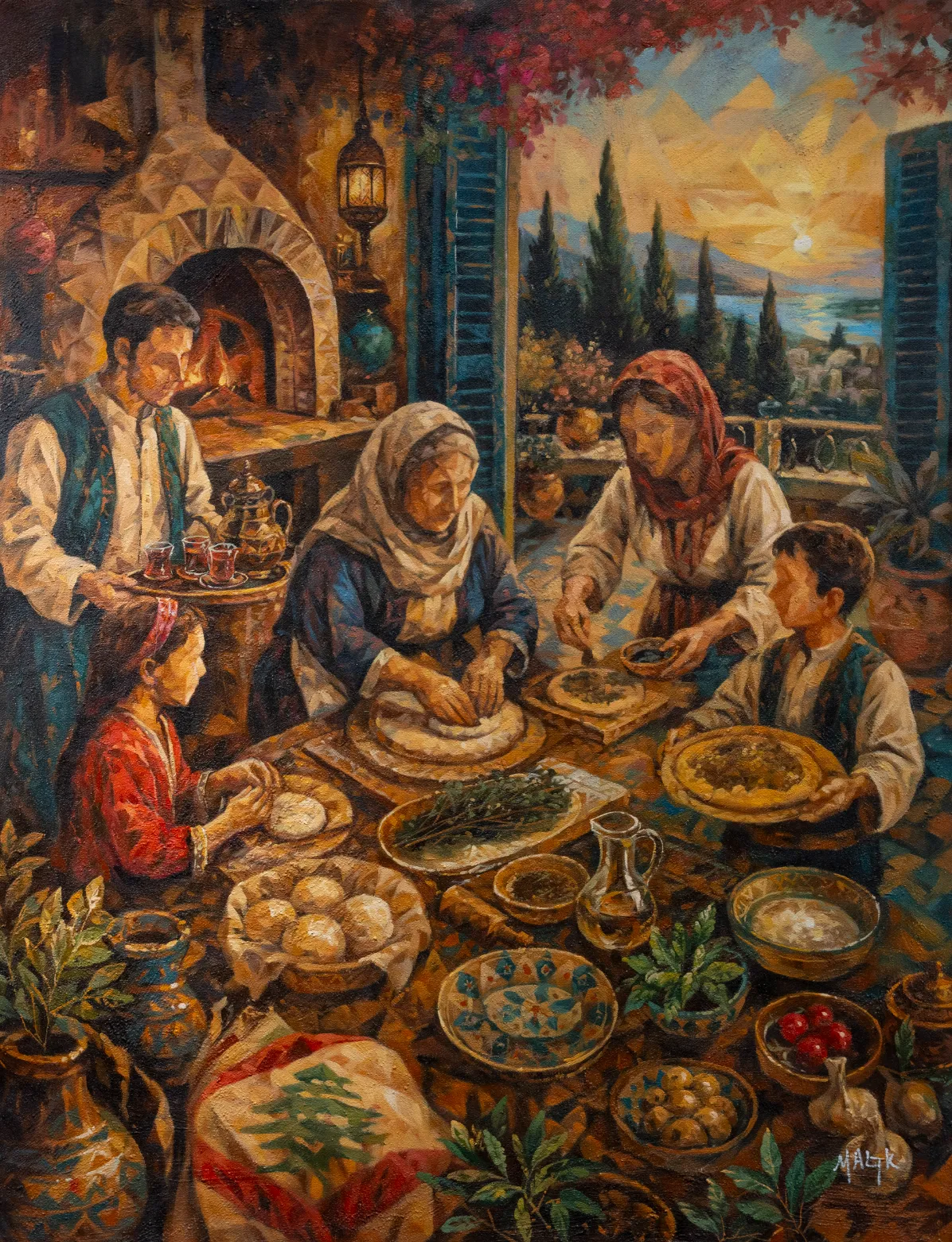
Three generations prepare man’ouché in the early morning. A bread board, za’atar and a copper tray draw the family together around the work of making breakfast.
The catalogue’s Lebanese chapter places this daily ritual beside a stone oven, with blue shutters, cedar hills and the Mediterranean forming its wider setting. The scene gives familiar food a central role in cultural memory.
A recipe carries more than ingredients. There is the movement of a hand, the judgement of when something is ready, and the memory of who taught us. The painting finds belonging in those repeated acts of care.
In Malak's Lebanese composition, cultural inheritance begins with breakfast. Three generations gather in the early morning to prepare man'ouché, transforming an everyday culinary ritual into an image of family memory, hospitality and belonging.
The choice is deliberate. Al-Man'ouché was inscribed on UNESCO's Representative List of the Intangible Cultural Heritage of Humanity in 2023. Prepared both in homes and in bakeries across Lebanon, it is an extraordinarily recognisable part of daily life — familiar not because it is ceremonial, but precisely because it is ordinary.
Malak places that ritual within a blue-shuttered Lebanese setting beside a stone oven. A bread board, a bowl of za'atar and a copper tray provide the modest objects around which the family comes together. Beyond them, cedar hills and the Mediterranean situate the scene geographically, while thyme, bougainvillea and warm morning light give the work its living natural elements.
The painting deliberately avoids narratives of absence or destruction. Lebanon is presented through what people repeatedly return to: food made for one another, tables shared, doors opened and recipes learned through participation. Lebanese sand incorporated within the painted walls and earth further grounds this intimate ritual in place. Some of the strongest forms of cultural memory, the work suggests, are not monumental at all.
They are made every morning.
The House of Generations